
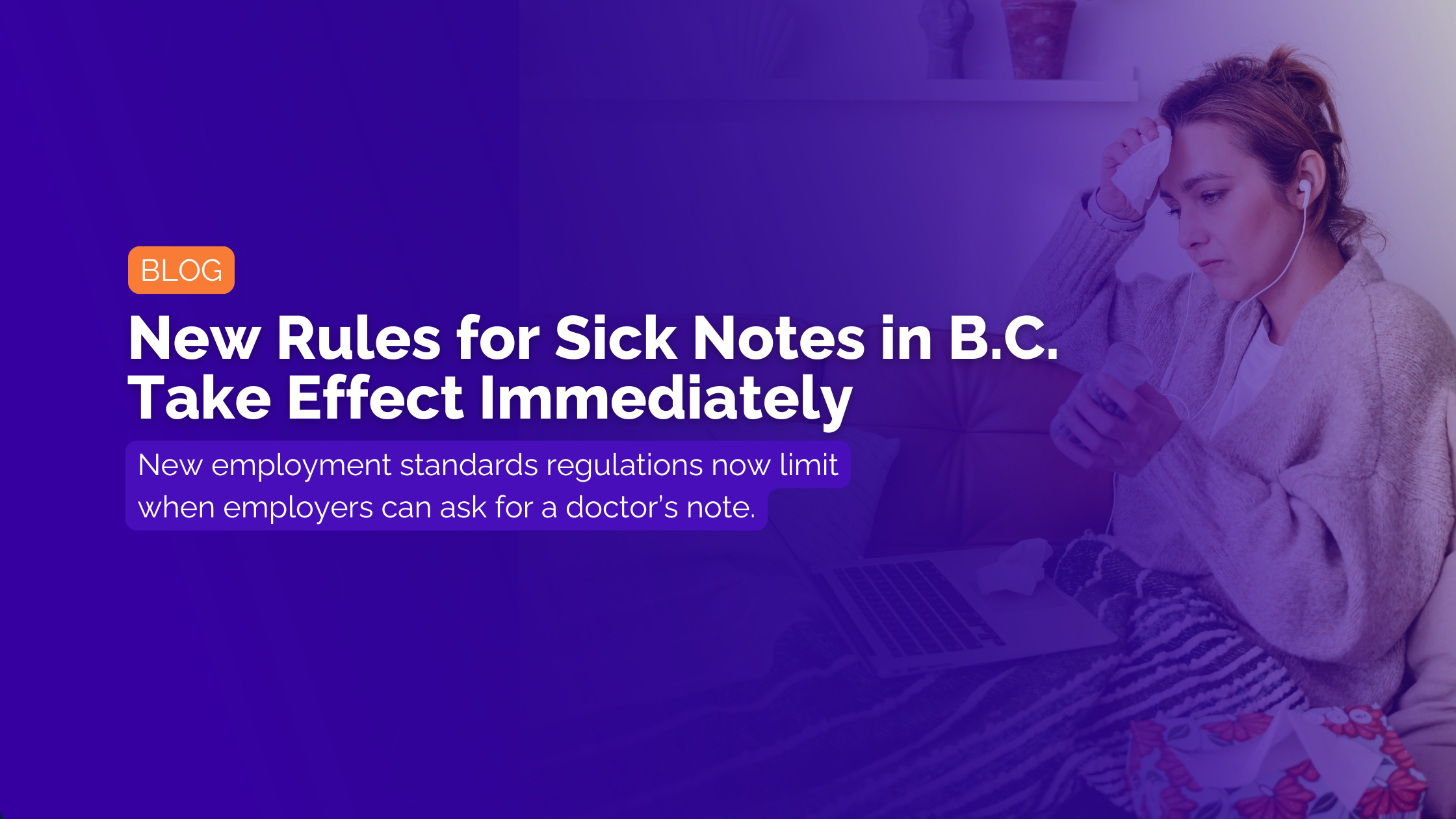
The Government of British Columbia has implemented significant changes to sick-note requirements—changes designed to reduce the administrative burden on both employees and health-care providers while helping prevent the spread of illness in workplaces.
Effective November 12, 2025, employers in B.C. are no longer allowed to request a doctor’s note for the first two short-term health-related absences an employee takes each calendar year. Here’s what you need to know and how this impacts your organization.
What Exactly Has Changed?
Under the new Employment Standards Regulation:
- Employers cannot require a sick note for an employee’s first two health-related absences of five days or fewer, per calendar year.
- This applies whether the illness or injury is for the employee or an immediate family member.
- The restriction applies to all 22 regulated health professions under the Health Professions Act, including physicians, nurse practitioners, dentists, pharmacists, physiotherapists, midwives, and others.
The intent is simple: reduce unnecessary medical visits and allow health-care professionals more time to treat patients who truly need care.
Why the Change?
Government leaders and health-care professionals have long argued that sick notes for minor, short-term illnesses create unnecessary pressure on clinics and workers.
According to the province:
- Most minor illnesses, such as colds, influenza, or routine infections, resolve within five days.
- Requiring employees to visit a clinic for a note increases the spread of illness.
- B.C. doctors issued an estimated 1.6 million sick notes in 2024 alone—consuming significant clinical time that could have been used for patient care.
- Health-care providers across B.C. have repeatedly called for limits on sick-note requirements.
As Jennifer Whiteside, Minister of Labour, put it:
“When you’re sick with the flu, the last thing you should have to do is visit a clinic to get a piece of paper saying you’re sick.”
The change also aligns B.C. with several other provinces and territories that have already restricted sick-note demands, including Ontario, Saskatchewan, Nova Scotia, New Brunswick, Prince Edward Island, the Northwest Territories, and federally regulated workplaces.
What This Means for Employers
For businesses operating in B.C., the new rules mean:
1. Update your HR policies and procedures
Organizations must revise internal policies to remove sick-note requirements for the first two short-term absences (five days or fewer). Any previous policy that contradicts the new standard is no longer compliant.
2. Train managers and supervisors
Front-line leaders should understand:
- When they can and cannot request documentation
- How to track the two-absence threshold
- How to respond when employees report illness
- A consistent response across the organization reduces conflict and ensures compliance.
3. Maintain clear attendance records
Accurate record-keeping will matter more than ever. Employers must track:
- The date(s) of each short-term absence
- The duration of the absence(s)
- Whether it falls within the first two occurrences
This will help determine when documentation can be requested later in the year.
4. Focus on trust and workplace culture
The shift away from routine sick notes signals a move toward trust-based attendance systems that support wellness and productivity. Employers who approach the change with empathy, flexibility, and clarity will see fewer disruptions and a more engaged workforce.
The Bigger Picture: Reducing Administrative Burden
The B.C. government emphasized that this reform is part of a broader strategy to reduce unnecessary paperwork across the health-care system. According to medical leaders:
- Sick-note requirements pull clinicians away from essential patient care.
- Employees with minor illnesses waste time and money on transportation, childcare, and missed rest, just to obtain documentation.
- The administrative burden is one of the leading contributors to physician burnout.
Doctors of BC and the Canadian Medical Association have both called for the elimination of sick-note requirements for short-term absences, marking this as a long-awaited change.
How Employers Can Prepare
Here are practical steps your organization can take:
- Review and update employment contracts, handbooks, and policies to reflect the new regulations.
- Communicate changes clearly to all staff through email, intranet, memos, or team meetings.
- Move toward self-declaration forms or similar tools for minor absences if you still require documentation beyond the first two occurrences.
- Ensure alignment with federal or other provincial standards if your workforce spans multiple jurisdictions.
- Seek HR or legal guidance if you’re unsure how to implement the changes appropriately.
